
10 Best Science Toys For Kids in 2026
This post contains affiliate links. As an Amazon Associate, we earn from qualifying purchases.
The Snap Circuits Explorer SC-100 STEM Kit earns our Best Overall spot because it introduces real electronics without soldering or tools, making it the safest entry point for young engineers. For kids who prefer smashing rocks, the Blue Marble NGGEO10 crystal kit is our top crystal discovery pick, while the Thames & Kosmos Hydraulic Boxing Bots wins for robotics fans.
The real challenge with science toys is finding a kit that matches your child’s age and attention span without leaving you with a pile of half-used supplies. Many kits promise dozens of experiments but require extra household items, while others focus on one deep project that may not hold interest.
We researched specifications, manufacturer documentation, and patterns in owner feedback to build this guide. The result is a curated list of 10 science toys that cover electronics, chemistry, geology, magnetism, and robotics, with clear guidance on which child each kit suits best.
Top 10 Science Toys For Kids in the Market



Certain content that appears on this site comes from Amazon. This content is provided "as is" and is subject to change or removal at any time.
The Best Science Toys For Kids, Reviewed
Snap Circuits Explorer SC-100 STEM Kit
What We Like
- No soldering or tools needed
- Award-winning STEM kit
- Color-coded numbered pieces
Trade-offs
- Requires batteries not included
- Projects are pre-designed, less open-ended
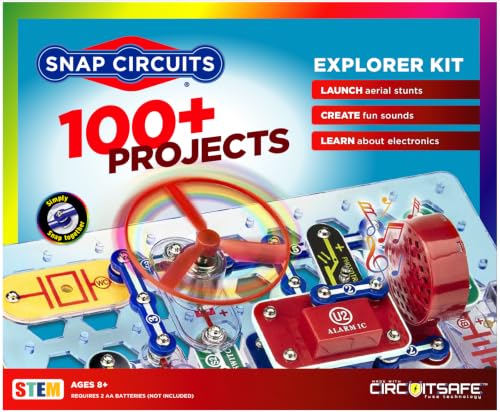
Over a hundred different electronic projects from a single box of 29 snap-together parts means your child can build a flying saucer one afternoon and a sound-alarm circuit the next. All without touching a soldering iron. That breadth of play is what makes this kit a natural starting point for ages 8 and up who are curious about how lights, buzzers, and switches actually work. The numbered and color-coded pieces snap onto a plastic grid, so there is no frustration with tiny screws or loose wires, just a clear path from the manual to a working gadget that teaches the basics of circuitry through doing.
The projects are laid out in the manual step by step, which limits the room for free experimentation compared to some other kits where you might build a robot and then modify it. If your kid prefers open-ended tinkering over following instructions, they might finish the hundred projects and want more. But for building confidence and foundational skills in electrical engineering without the mess or safety worries of traditional kits, this is where I would start every time.
Blue Marble NGGEO10 Science Toys

What We Like
- Hand-selected for crystal variety
- Includes safety goggles and guide
- 100% natural geodes for real discovery
- National Geographic learning guide included
Trade-offs
- Geode size varies (tennis ball to ping-pong ball)
- Messy cracking process needs adult supervision
- Single activity limits repeat play
Ten natural geodes in one box means your child gets ten separate moments of genuine geological surprise, not just one quick crack-and-done. That variety is the whole point: each rock hides a different crystal formation inside, so the excitement stretches across multiple sessions. It suits curious kids who love the thrill of breaking something open to find a hidden treasure. The included safety goggles and full-color learning guide turn a messy activity into a proper mini geology lesson. No batteries, no screens, just a hammer and a sense of wonder.
The real trade-off is the mess and the size range. Geodes can come as small as a ping-pong ball or as big as a tennis ball, so you cannot promise a guaranteed giant crystal every time. That unpredictability is part of the natural appeal, but it also means a single-use activity per geode. Compared to the Snap Circuits Explorer SC-100, which keeps building 100 different projects from the same parts, this is a one-time cracking event rather than a reusable engineering set. Best for a rainy afternoon that needs a tangible, hands-on payoff, not for families wanting a kit that stretches across weeks of open-ended play.
Product photos
Thames & Kosmos Hydraulic Boxing Bots
What We Like
- Builds two complete boxing robots
- Includes scoreboard for head-to-head battles
- Teaches hydraulics, gears, cylinders, pistons
- Upper and lower body move independently
Trade-offs
- Requires water for hydraulic operation
- Two-player only, no solo play mode
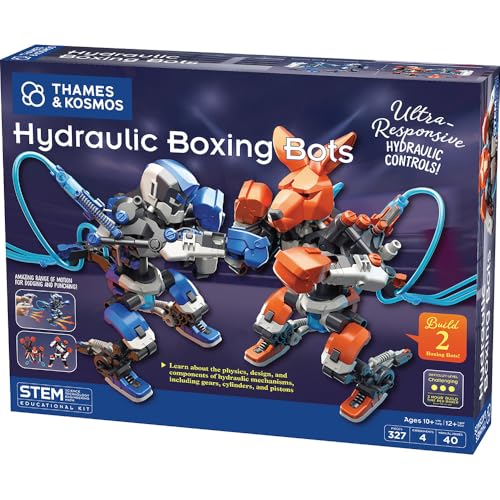
You get two complete boxing robots plus a scoreboard in one kit, so after assembly you can challenge a friend to a hydraulic battle. The system uses water to power gears, cylinders, and pistons, and each robot’s upper and lower body move independently, allowing them to dodge, jab, and punch with accuracy. That hands-on physics lesson about real hydraulic mechanisms is perfect for kids who want to see engineering in motion. It suits a builder who enjoys a hands-on project and then actually uses what they made.
The real trade-off is this demands a partner; there is no solo mode, so if your child prefers working alone, a kit like the Snap Circuits Explorer offers independent project work. Also, the water requirement means you will need to fill and empty the system each session, which adds a little setup and cleanup step. For a kid who wants to understand how machinery moves and has a friend to spar with, this delivers that experience directly.
Blue Marble NGMEGACHEMAR Science Toys

What We Like
- 100+ experiments in one box
- Bonus 85 experiments use household items
- Includes real lab tools
Trade-offs
- Only 15 experiments include all materials
- Bonus experiments require common household supplies
- Targeted at ages 8-12, not younger kids
A hundred-plus experiments sound like a lot of chemistry for one box, and that’s exactly what you get, but only fifteen of them come with the labware and chemicals included. The rest are a separate guide that sends you raiding your pantry for vinegar, baking soda, and the like. That’s not a bad thing if you already keep a stocked kitchen, and it means the fun doesn’t stop when the included supplies run out. This kit suits the kid who loves mixing, fizzing, and color-changing reactions and who has a patient adult nearby to help gather the extra odds and ends.
The kit includes real scientific tools like test tubes, beakers, and pipettes, so kids get to handle actual lab equipment while exploring chemistry. Compared to the National Geographic Chemistry Set with 45 Experiments, this Blue Marble set offers more than double the total experiments, yet it weighs nearly a full pound less, making it easier for a child to carry to a table or store on a shelf. The catch is that the heavier kit provides all materials for every one of its 45 experiments ready to go, while here you’ll need to gather common household items for the 85 bonus experiments. For a young scientist who loves the process more than the prep, this is a fine place to start.
Thames & Kosmos Ooze Labs Chemistry Station
What We Like
- Complete lab station with 57 pieces
- Includes non-hazardous chemicals, no borax
- Experiment cards clip onto station for reference
- 16-page full-color manual with explanations
Trade-offs
- No advanced chemistry topics for older kids
- Limited to included chemicals; no refill options mentioned
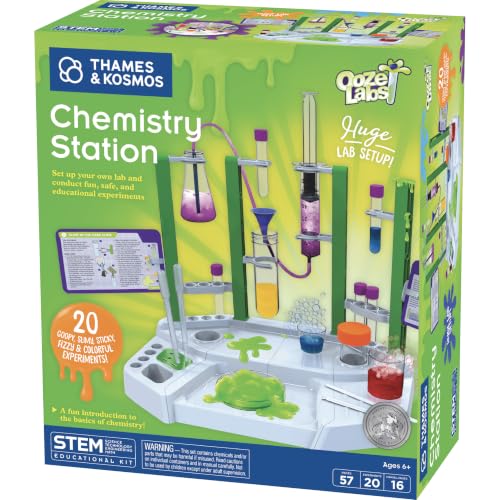
A 57-piece lab station with beakers, test tubes, flasks, pipettes, and clip-on experiment cards means a child can set up and run real-looking chemistry experiments right out of the box. That complete setup is why this kit stands out for young scientists aged six and up. It gives them a functional, colorful workspace that mimics a real lab, with non-hazardous chemicals and no borax so parents can relax. The 16-page manual walks through glowing slime, fizzing reactions, and an underwater volcano, making each experiment feel like a discovery rather than a chore.
The whole kit weighs only one pound, which makes it easy for small hands to carry and set up, though the plastic components may not withstand rough handling as well as heavier kits. For a child who loves following colorful cards and mixing safe concoctions without needing a dozen extra supplies, this is a focused, ready-to-go chemistry experience. It’s not built for older kids chasing advanced reactions, but for the age it targets, the lab station design removes the biggest barrier: setup hassle.
National Geographic Chemistry Set with 45 Experiments
What We Like
- 45 experiments with volcano, geyser, rocket
- Kid-friendly illustrated instructions
- Hands-on STEM learning fundamentals
Trade-offs
- At 2.9 pounds, heavier than some kits
- Requires adult supervision for younger kids
Forty-five experiments packed into one box means your child gets a volcano that erupts, a geyser that blasts, and a rocket that launches, all from the same kit. That variety keeps a curious 8-to-12-year-old engaged across multiple afternoons, not stuck on one project. The step-by-step guide with illustrations makes it easy to follow even if you’re not a chemistry whiz, and the hands-on reactions teach real scientific process without feeling like homework. For families wanting a single set that covers the classic crowd-pleasers, this delivers a lot of bang for the space it takes up on the shelf.
The National Geographic Chemistry Set includes 45 experiments, which is a solid number for a kid who enjoys science but won’t stretch as far for someone who races through projects. The UNGLINGA 150 Experiments Science Kit offers over three times as many activities, but this kit focuses on classic crowd-pleasers like a volcano eruption, a geyser, and a rocket launch. The set weighs 2.9 pounds, so it’s sturdy enough to stay put on a table but a bit heavy to carry from room to room. Blue Marble, the developer, won the Toy of the Year Award and backs the product with a U.S. support team, which gives parents a direct line for help if anything goes wrong.
Klutz Lego Gear Bots Science/STEM Activity Kit
What We Like
- Builds 8 physics-driven kinetic creatures
- Includes every LEGO element needed
- Teaches axles, cams, cranks in 64-page book
Trade-offs
- 8 creatures mean less depth per build than single-model kits
- Papercraft shells are not reusable like all-plastic parts
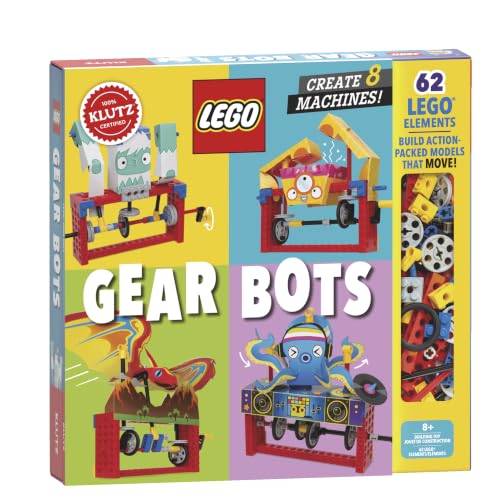
Eight kinetic creatures from one box means you get a solid week of building without repeating yourself. Every LEGO Technic brick you need is included, so there’s no hunting through old bins or making extra trips. The 64-page guide walks through axles, cams, and cranks with step-by-step instructions, turning each build into a quiet lesson in how real machines transfer motion. For a child who loves LEGO and wants to see their creations actually move, this kit delivers variety and genuine engineering concepts without feeling like homework.
The 64-page book packs in STEM lessons about axles, cams, and cranks alongside step-by-step instructions, so kids learn real engineering concepts while building. Each of the 8 kinetic creatures uses LEGO Technic bricks and papercraft, giving a mix of mechanical building and craft that keeps the project fresh. For a LEGO fan who enjoys variety and doesn’t mind the paper parts being consumable, this kit offers a thoughtful introduction to mechanics.
Product photos
UNGLINGA 150 Experiments Science Kits for Kids Chemistry Lab
What We Like
- 150 experiments covering multiple science topics
- Includes goggles and lab tools
- Easy-to-follow illustrated manual
- Uses common household items for many projects
Trade-offs
- Some experiments require additional household supplies
With 150 experiments packed into one box, this kit gives you enough projects to keep a curious kid busy for weeks without repeating the same trick twice. The topics span earth science, surface tension, chemistry, and physics, so you get a broad introduction rather than a deep dive into one area. The included goggles and lab tools help the experience feel legit, and the step-by-step illustrated manual means you can hand it to an older child and let them work through it independently. You can supervise from the kitchen table. It’s a strong match for families who want variety and a ready-to-go setup without hunting down specialty supplies for every single activity.
Not everything you need comes in the box, some experiments call for regular household items like vinegar or baking soda, so you’ll want to check the manual ahead of time if you’re planning a Saturday afternoon session. The kit packs 150 experiments into a box that measures 11.4 by 8.7 by 3.9 inches, which is compact enough to store on a bookshelf or in a closet. Just be ready to have a few pantry staples on hand, and you’ll get a lot of mileage out of this kit before the kid moves on to the next obsession.
Product photos
Learning Resources STEM Explorers Magnet Movers

What We Like
- 10 guided challenge cards included
- Hands-on magnetism exploration
- Child-friendly magnetic tools
- Durable for repeated use
Trade-offs
- Limited to magnetism only, no broader physics
- No experiments beyond magnetic forces
The 10 guided challenge cards structure play so kids explore attraction, repulsion, and motion without needing extra setup or cleanup. Child-friendly magnetic tools are sized for small hands and built to withstand repeated use at home or in the classroom. That design supports early science skills like observation, prediction, and reasoning through hands-on activity.
This kit explores magnetism and nothing else. If your kid craves building circuits or cracking rocks, the Snap Circuits Explorer SC-100 covers electronics with over 100 projects, while the National Geographic Geodes kit delivers geology.
Product photos
Butterfly EduFields Science Kits for Kids Ages 4-8
What We Like
- 100+ experiments for ages 4-8
- Screen-free, hands-on STEM learning
- Safety certified to ASTM F963-17
- Pictorial instruction manual for independence
Trade-offs
- Small parts like test tubes need adult supervision
- Not suitable for children under age 4
A hundred experiments crammed into one box means this kit can keep a 4-to-8-year-old busy for weeks without a single screen. The included safe chemicals and easy-to-use tools let kids dive into hands-on learning right away. Parents report that the pictorial instruction manual makes it simple for children to follow each step independently, reducing frustration and the need for constant adult help. Because the kit meets ASTM F963-17 U.S. safety standards, caregivers can feel confident letting young scientists explore at home. Essential items like cups, test tubes, funnels, and gloves come in the box, so families don’t need to hunt for extra supplies.
The kit includes many small pieces like cups, test tubes, and scoops, so you’ll want to supervise younger siblings or enthusiastic pourers. Compared to the Snap Circuits Explorer SC-100, which is for ages 8 and up and focuses on electronics projects, this Butterfly EduFields kit offers a wider variety of chemistry and volcano activities. If your child enjoys jumping from one experiment to another, this kit is a good fit. If they prefer mastering a single skill, the Snap Circuits might be a better choice.
Product photos
How We Evaluated Science Toys For Kids
This guide is research-based. We studied manufacturer specifications, safety certifications, and learning objectives for each kit. We also analyzed patterns in owner feedback to understand what works in real homes and what frustrates families after the first use.
The four criteria that mattered most were safety, educational depth, completeness, and replay value. Safety means age-appropriate materials and non-hazardous chemicals. Educational depth is about how much a child actually learns versus just watching a reaction. Completeness looks at whether the kit includes everything needed or requires extra supplies. Replay value considers if the child can revisit the kit or if it is a one-time activity.
A research-based evaluation has limits. Individual results vary by the child’s interest level and adult involvement. What we can tell you is which kits consistently satisfy families and how to match them to your child’s personality.
What To Look For In Science Toys For Kids
The best science toy for your child depends on their age, reading ability, and whether they enjoy following instructions or prefer open-ended exploration. Start with these criteria before you buy.
A science kit should match your child’s age range, include clear instructions, and offer enough experiments to justify the purchase. Safety certifications and non-toxic materials are non-negotiable for younger kids.
Age Range and Reading Level
Most kits specify an age range, usually 6-8 or 8-12. A kit that is too advanced frustrates kids; one that is too simple bores them. Check whether the instruction manual expects independent reading or if an adult needs to lead the activity. The Butterfly EduFields kit for ages 4-8 uses pictorial instructions so early readers can follow along without help.
Experiment Count vs. True Value
A kit claiming 100+ experiments sounds impressive, but check how many include all materials. The Blue Marble NGMEGACHEMAR kit has 100+ experiments but only 15 come fully supplied; the rest need household items. If you want everything in the box, look for kits like the Thames & Kosmos Ooze Labs station that include all chemicals and tools.
Subject Focus and Replay Value
Some kits are single-activity (crack one geode, build one robot) while others offer repeat experiments. The Snap Circuits kit lets kids rebuild circuits in different configurations, and the Learning Resources Magnet Movers includes challenge cards for repeated use. Think about whether your child enjoys mastering one topic or bouncing between many.
- Read the product description carefully for what is included versus what you must supply
- Check whether refill packs or expansion kits are available for longer play
- Look for safety certifications like ASTM F963 for kits marketed to younger children
- Consider storage: kits with many small parts need a container or bag to keep pieces together
A good rule of thumb: if the kit requires more than two common household items you do not already have, factor in the cost and effort of gathering them before you buy.
Science Toys For Kids Compared
The table below compares all 10 science toys across the features that matter most: age range, experiment count, subject focus, and what is included in the box.
| Product | Age Range | Projects / Experiments | Weight | Dimensions |
|---|---|---|---|---|
| Snap Circuits Explorer SC-100 STEM Kit | 8+ | 100+ | 1.4 pounds | L 12.0 inches, W 9.5 inches, H 1.8 inches |
| Blue Marble NGGEO10 Science Toys | 8-12 years | N/A | 2.1 pounds | L 2.7 inches, W 7.7 inches, H 12.0 inches |
| Thames & Kosmos Hydraulic Boxing Bots | Ages 10+ | 2 robots + scoreboard | 1.8 pounds | L 14.8 inches, W 3.0 inches, H 11.3 inches |
| Blue Marble NGMEGACHEMAR Science Toys | Ages 8-12 | 100+ | 1.8 pounds | L 8.8 inches, W 3.2 inches, H 11.9 inches |
| Thames & Kosmos Ooze Labs Chemistry Station | Ages 6+ | 57 pieces | 1.0 pounds | L 11.5 inches, W 5.0 inches, H 10.0 inches |
| National Geographic Chemistry Set with 45 Experiments | 8-12 years | 45 | 2.9 pounds | 8.8 x 3.2 x 11.9 inches |
| Klutz Lego Gear Bots Science/STEM Activity Kit | 8-12 years | 8 kinetic creatures | 1.0 pounds | L 10.0 inches, W 1.5 inches, H 10.0 inches |
| UNGLINGA 150 Experiments Science Kits for Kids Chemistry Lab | N/A | 150 | N/A | 11.4 x 8.7 x 3.9 in |
| Learning Resources STEM Explorers Magnet Movers | N/A | 10 guided activities | 0.8 pounds | 8.3 x 8.1 x 2.8 inches |
| Butterfly EduFields Science Kits for Kids Ages 4-8 | 4-8 years | 100+ | 1.7 pounds | L 10.0 inches, W 5.0 inches, H 1.0 inches |
Frequently Asked Questions
What is the best science toy for a 7-year-old?
The Snap Circuits Explorer SC-100 STEM Kit is our top pick for most 7-year-olds because it requires no soldering or tools and uses color-coded numbered pieces. For a 7-year-old who loves rocks, the Blue Marble NGGEO10 crystal kit is a strong alternative. Check our guide to science toys for 6-year-olds for age-specific recommendations.
How do I choose a science toy that keeps my child interested?
Look for kits with high experiment counts and clear instructions. The UNGLINGA 150 Experiments Science Kit covers multiple topics in one box, which helps if your child loses interest in a single subject. Also consider whether your child prefers guided projects (Snap Circuits) or open-ended building (Thames & Kosmos hydraulic bots).
Are science kits safe for young children?
Yes, when you buy age-appropriate kits with safety certifications. The Thames & Kosmos Ooze Labs Chemistry Station uses non-hazardous chemicals and no borax, and the Butterfly EduFields kit is safety certified to ASTM F963-17. Always supervise children under 8 during experiments, especially those involving small parts or messy materials.
What science toys teach coding or programming?
For coding-focused learning, we recommend exploring our guide to coding toys for kids. The Snap Circuits kit teaches basic circuit logic that underlies programming concepts. The Thames & Kosmos Hydraulic Boxing Bots teach mechanical engineering and hydraulics, which are complementary skills to coding.
Can I use science toys for homeschool science curriculum?
Yes, many of these kits work well as homeschool supplements. The National Geographic Chemistry Set with 45 Experiments and the Blue Marble NGMEGACHEMAR kit with 100+ experiments both provide enough activities to cover a semester of elementary science. Pair them with our guide to how to choose STEM toys to build a complete curriculum plan.
The Bottom Line
The Snap Circuits Explorer SC-100 STEM Kit is the best overall science toy for most families. It delivers real electronics learning without the danger of soldering or the frustration of loose wires, and it works for a wide age range from early elementary through middle school. If your child is not into circuits, one of the other nine picks covers every major science interest from geology to chemistry to magnetism.
Budget-minded families will find the best value in the UNGLINGA 150 Experiments kit, which covers the most topics per dollar. For a child who wants to build and battle a friend, the Thames & Kosmos Hydraulic Boxing Bots delivers a two-player head-to-head experience. You will enjoy it as much as your kid does. The single most important factor is matching the kit to your child’s personality. A child who follows instructions thrives with Snap Circuits. An explorer who loves surprises will crack open a Blue Marble geode for weeks.
